A car that feels perfectly fine at 35 mph but starts shaking at 55 or 65 usually points to a problem that shows up only when certain parts are spinning fast enough to expose it. That is why these vibrations feel so specific. The vehicle may seem normal around town, then suddenly develop a shake on the highway that fades again once you slow down.
That speed-related pattern is a useful clue that can lead to the core reason for the issue.
Why Speed-Specific Shakes Point To Rotating Parts
When a vibration appears only in a certain speed range, the first suspects are usually parts that rotate with the vehicle’s movement. Tires, wheels, brake components, axle shafts, and driveline parts all spin at road speed, and a small flaw in one of them becomes much easier to feel once the rotation reaches a certain point. Below that speed, the issue may stay mild enough to miss.
This is why the exact speed range tells you a lot. A shake that starts around 50 mph and gets worse through 70 mph usually points in a different direction than one that shows up only during braking or only under acceleration. A good inspection should always begin with when the vibration happens, not just that it happens.
Tires Are The Most Common Cause
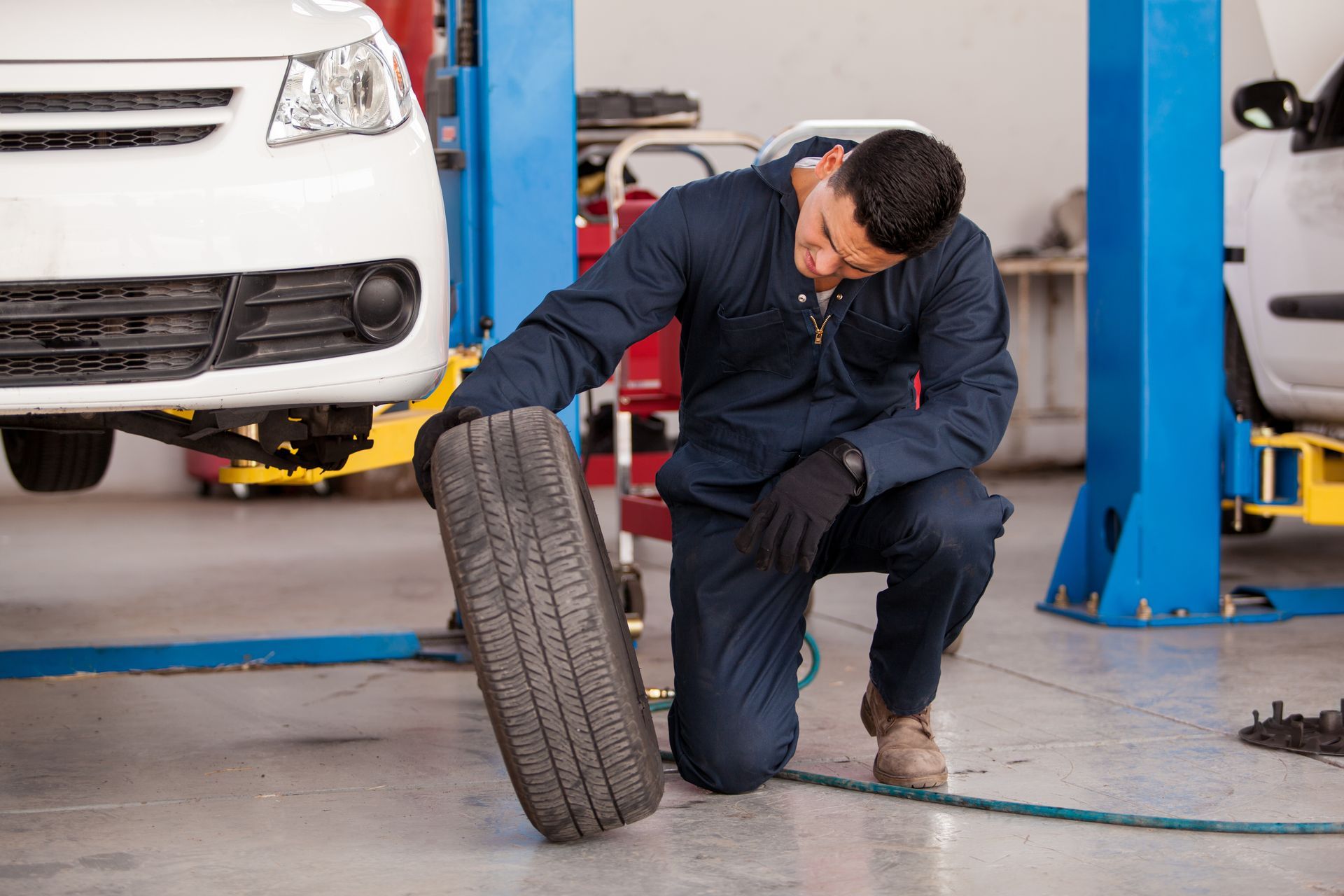
Tires are the most common reason a car shakes at certain speeds. Uneven tread wear, broken internal belts, flat spots, separated tread, or simple imbalance will all show up more clearly once the tire is rotating fast enough. The steering wheel may shake if the problem is in the front tires, while a seat or floor vibration often points farther back.
Low tire pressure can make the problem feel worse, though it is rarely the only issue. A damaged tire may look almost normal until it is checked closely on a lift or spun during an inspection. We find this often on vehicles that have had a recent pothole hit or have been driving on tires with uneven wear for too long.
Wheel Balance And Bent Wheels Create A Narrow Speed Vibration
A wheel balance issue tends to create one of the most classic speed-range shakes. The car feels fine at lower speeds, starts vibrating in a specific highway range, then may calm down again as speed climbs past that point. That happens because the imbalance reaches a level strong enough to transfer through the suspension into the cabin.
Bent wheels cause similar complaints. Even a small bend from a pothole or curb hit will change how the wheel turns, and that imperfection gets easier to feel the faster the car moves. If the vibration started after a road impact, the wheels move much higher on the suspect list right away.
When The Drivetrain Or Suspension Is Involved
Not every speed-specific shake comes from a tire or wheel. Sometimes the problem comes from the parts that support or transfer power through the vehicle.
If It Shakes Under Acceleration
A worn CV axle, axle shaft issue, or drivetrain problem will often show up when you are on the gas. The vehicle may feel smooth while coasting, then start vibrating once power is applied.
If It Shakes Even While Coasting
That usually pushes tires, wheels, or wheel bearings higher on the list because the vibration is tied more directly to road speed than engine load.
If It Changes During Braking
That points more toward brake rotor variation or front-end movement under load. In that case, the shake is not truly speed-only because braking is part of the pattern.
These differences are useful because they help separate a rotating tire problem from a powertrain or brake problem before parts get replaced blindly.
Road Clues That Help Narrow It Down
Drivers usually notice a few extra details that make diagnosis much easier. If the steering wheel shakes, the front end deserves close attention. If the vibration is felt more through the seat, rear tires, or rear suspension become stronger suspects. If the shake appears with a humming noise, a wheel bearing may be involved.
A vibration that gets stronger with passengers or cargo can point to worn suspension parts reacting to increased load. One that becomes worse on rough pavement may reveal looseness in bushings, tie rods, or struts. During regular maintenance, those worn parts are often found before they cause significant and dangerous highway shaking.
Why Waiting Usually Makes It More Expensive
A vibration is rarely just an annoyance. An out-of-balance tire will keep wearing unevenly. A bent wheel will keep stressing the tire mounted to it. A worn axle or loose suspension part will keep transferring extra movement into nearby components. What starts as a shake at one speed often grows into tire wear, steering looseness, and a more expensive repair list.
That is why it pays to deal with the problem while it is still narrow and predictable. A shake that occurs only in one speed band is often easier to trace because the pattern remains clean. Once it gets worse, the clues start overlapping, and the vehicle usually needs more than one correction.
What A Proper Check Should Include
This kind of problem needs more than a quick test drive. Tire condition, wheel balance, wheel runout, suspension wear, axle condition, and brake feel all need to be evaluated together. A thorough inspection will usually reveal whether the problem is a wheel-and-tire issue, front-end wear, or something deeper in the drivetrain.
That full approach leads to a real fix rather than a temporary improvement.
Get Auto Repair In Florida With Curry Truck & Auto
If your car shakes only at certain speeds, Curry Truck & Auto can check the tires, wheels, suspension, and drivetrain to find the exact source of the vibration. Catching it early usually protects your tires and keeps the repair much more straightforward.
Bring it in before that highway shake spreads into bigger wear and a much rougher drive.