If you’ve ever taken a close look at the bottom of a favorite pair of running shoes, you might have noticed that the rubber isn't worn down perfectly flat. Maybe the heel is shaved down on the outside edge, or the inside ball of your foot is smooth. Your shoes wear out based on how you walk. Guess what? Your car does the exact same thing.
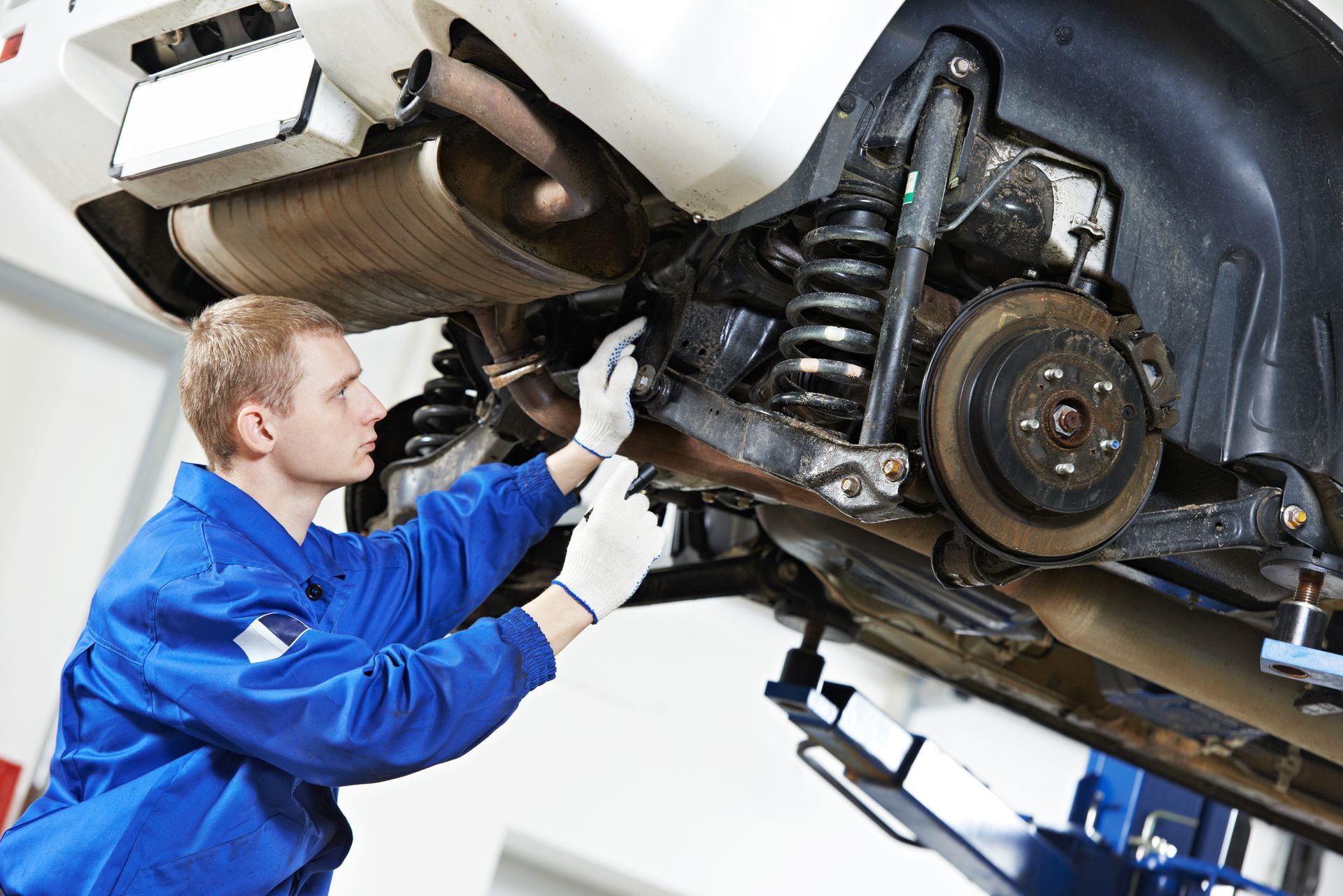
At our shop, we spend a lot of time looking at tires from the underside of a hydraulic lift. Tires speak a unique language, and the way they wear out tells us a detailed story about what is happening with your steering, your suspension, and your daily driving habits. If you’ve noticed that one side of your tire looks like a racing slick while the other side still has plenty of deep groove left, your car is trying to send you a message. Today, we’re going to decode those strange wear patterns and explain exactly how to fix them before you have to shell out cash for a brand-new set of rubber.
Why Uniform Wear Matters
Before we get into the problems, let’s talk about the goal. Ideally, your tires should wear down at an even, uniform rate across the entire width of the tread. When they don't, you aren't just losing money by shortening the lifespan of the tire; you’re losing performance.
Uneven tread reduces your car’s ability to grip the road properly in rain or snow, increases your braking distances, and can even cause your vehicle to pull stubbornly toward one side of the highway.
Common Tire Wear Patterns and Their Causes
When we inspect a tire showing uneven wear, it usually falls into one of a few classic categories. Here is what we look for and what it typically means:
- Wear on Both Outer Edges (Under-Inflation): If the center of your tire looks fine but both the inside and outside shoulders are smooth, your tire is low on air. When a tire is under-inflated, the center bows inward, forcing the car’s weight onto the outer edges.
- Wear Straight Down the Center (Over-Inflation): If the middle of the tread is bald but the edges look brand new, you’ve put too much air in. The tire balloons out in the center, causing it to bear the brunt of the asphalt.
- Wear on Just One Edge (Alignment Issues): This is the classic "camber" wear. If either the inside edge or the outside edge is completely shaved down, your wheels are tilted at an incorrect angle. Your car is essentially dragging the tire sideways down the road.
- Cupping or Scalloping (Suspension Failures): If the tread looks wavy, with random "scoops" or dips worn out around the circumference, your tire is physically bouncing up and down as you drive. This points directly to worn-out shocks or struts that can no longer hold the wheel firmly to the pavement.
How We Fix the Root Problems
Slapping a new tire onto a car with severe alignment or suspension issues is like putting a tiny band-aid over a deep cut—the new tire will suffer the exact same fate within a few thousand miles. To truly fix uneven wear, we have to address the mechanical root causes.
The Wheel Alignment
This is the most common remedy. Using laser-guided alignment machines, we adjust the angles of your steering and suspension components back to the precise fractions of a degree specified by the factory. This ensures your tires sit perfectly flat on the road and point in the exact same direction.
Suspension Component Replacement
If your tires are cupping, we look closely at your shocks, struts, ball joints, and control arm bushings. Replacing these worn-out pieces stops the wheel from shaking and bouncing, keeping your ride smooth and your tread flat.
Regular Tire Rotations
Front tires handle all the stress of steering and braking, while rear tires mostly just roll along for the ride. Because they pull different duties, they naturally wear differently. Moving your tires from front to back and side to side every 5,000 to 7,500 miles balances out those forces and extends the life of the whole set.
The Check You Can Do Today
You don't need a mechanic's license to run a quick diagnostic check on your driveway. Turn your steering wheel all the way to one side so you can see the full width of your front tires. Run your hand across the tread from the inside edge to the outside edge. It should feel smooth and uniform. If it feels rough, jagged, or visibly bald on one side, it’s time to take action.
Let Us Save Your Rubber
Tires are one of the most significant investments you make in your vehicle’s maintenance. Catching uneven wear early can mean the difference between a simple, affordable wheel alignment or being forced to replace two or four expensive tires way ahead of schedule.
If your steering wheel feels crooked when you're driving straight, if your car drifts to the right or left, or if your tires are looking a little lopsided, let the team at Curry Truck & Auto in Venice, FL take a look. We will diagnose the exact mechanical cause of the wear, get your suspension dialed in, and help you get every single mile out of your tires.
Stop by one of
Curry Truck & Auto’s three locations in Venice, FL or schedule an appointment online today.